

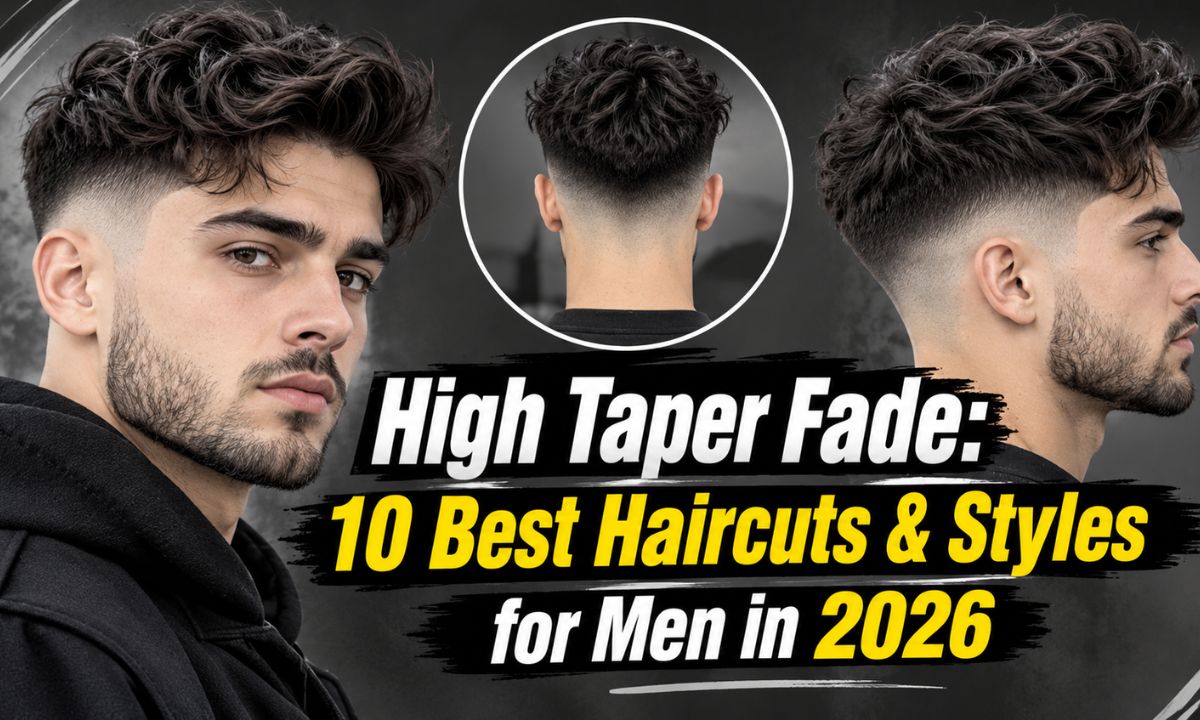
The high taper fade is one of the cleanest cuts a man can get. It looks sharp at the office. It looks right at the gym. It also works on a night out. That is why barbers across the USA book it every single day.
This guide explains the cut in plain words. You will learn how it differs from other fades, who it suits, and how to ask for it. You will also see 10 style ideas, plus care tips and common mistakes. Read on, then walk into your next appointment with confidence.
What Makes a High Taper Fade Different?
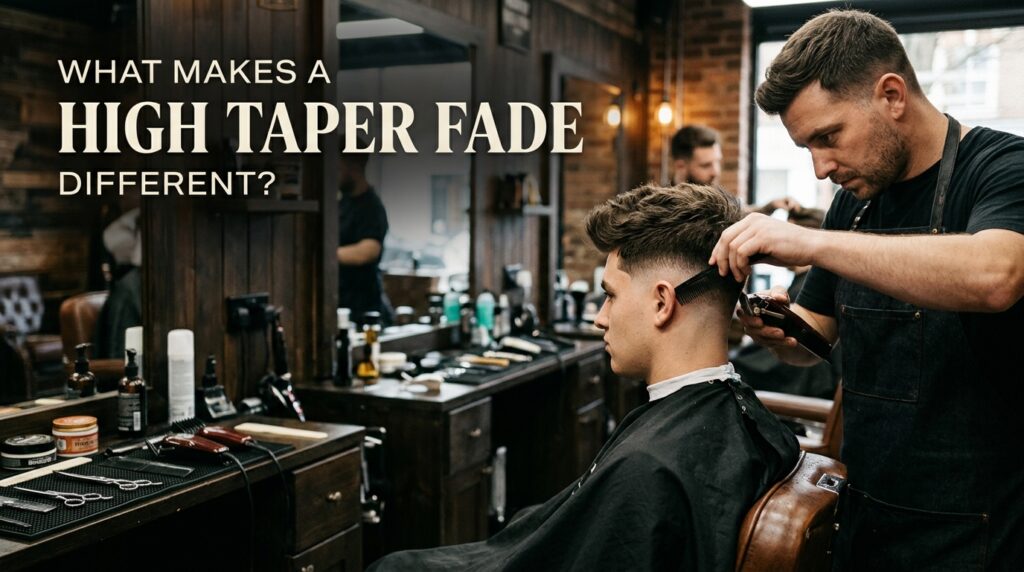
A high taper fade starts high on the head. The hair begins to shorten near the temples and the upper part of the sides. It then gets shorter as it moves down toward the ears and neck. The change is smooth, not harsh.
The word “taper” is the key. A taper is a gradual change in length. The word “high” tells you where the change starts. In a high taper fade, the shortest section sits well above the ear line. That gives you a bold, clear contrast between the top and the sides.
Most people notice two things at once. First, the sides look very short and neat. Second, the top looks fuller by comparison. This contrast makes the face look sharper and the hair look more styled.
Here are the main traits of the cut:
- The fade starts above the temple.
- The length drops in small steps.
- The neckline can be tapered or blocked.
- The top can be any length you like.
- The look is clean but not extreme.
Many men search for high tapers, high taper, or high fade taper and mean the same thing. Barbers may use slightly different names. The idea stays the same. Short and neat sides, a high starting point, and a smooth blend.
High Taper vs Mid Taper vs High Fade
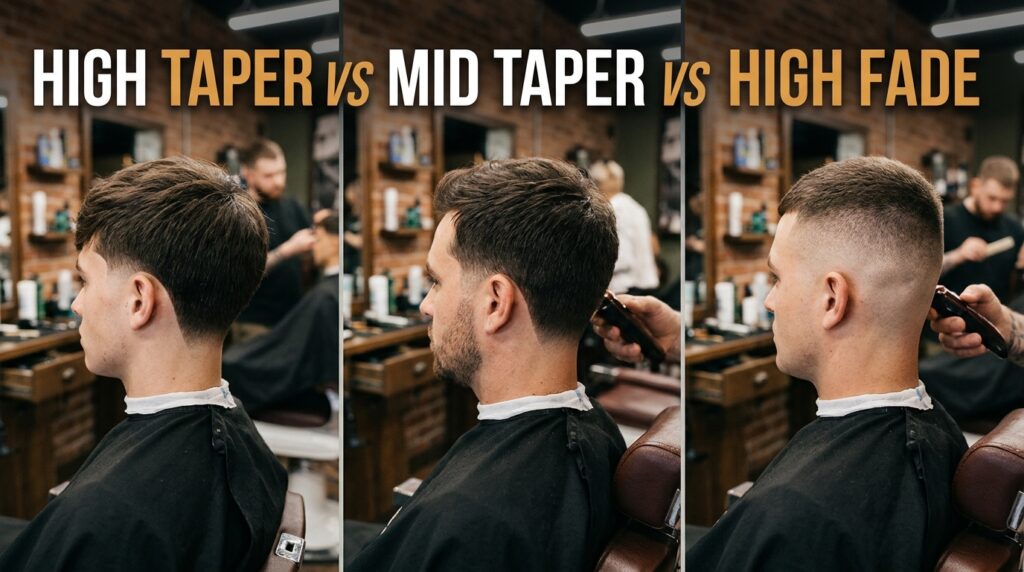
These three cuts sound alike. They are not the same. Knowing the gap will save you from a bad haircut.
A high taper keeps most of the sides intact. The shortening happens mostly around the sideburns and the neckline. The hair is shorter at the edges, but it does not drop to skin everywhere. It is a softer take on the fade.
A high fade is bolder. The hair goes very short, often to skin, and the blend climbs high on the head. You see more skin and a stronger contrast. A high fade makes a statement. A high taper makes a neat point.
A mid taper fade starts lower, around the middle of the side of the head. It sits between a low and a high cut. It is the safe pick for men who want a clean look without drawing too much attention.
| Feature | High Taper Fade | Mid Taper Fade | High Fade |
| Starting point | Above the temple | At the temple line | Above the temple |
| Shortest length | Short, often not bare | Short | Very short or skin |
| Contrast | Medium to strong | Medium | Strong |
| Best for | Clean, modern look | Everyday wear | Bold, sharp style |
| Maintenance | Every 2 to 3 weeks | Every 3 weeks | Every 2 weeks |
If you compare high taper fade vs mid taper fade, think about how much contrast you want. High gives more. Mid gives less. Both look tidy. Pick the one that fits your work, your face, and your daily routine.
Compare your preferences first
Before you book, ask yourself a few simple questions. Your answers will point to the right cut faster than any photo.
Start with your work life. Some jobs welcome a sharp, high contrast cut. Others prefer a softer look. A high taper is usually safe in both settings, but a skin finish may feel too bold in a very formal office.
Next, think about time. A high fade needs more frequent trims. If you hate going to the barber every two weeks, a taper is the better choice. It grows out more gently.
Then think about styling. Do you want to spend five minutes in the morning, or thirty seconds? Your top length and hair type will decide this. A short crop needs almost no effort. A textured quiff needs product and a few tools.
Use this quick checklist before your visit:
- How short do I want the sides?
- How bold do I want the contrast?
- How often can I visit a barber?
- How much time do I have each morning?
- What does my hair type do naturally?
- Do I want a clean neckline or a natural one?
Take two or three photos with you. Show the front, the side, and the back. This helps your barber see the exact blend you like. It also cuts down on guesswork.
Read More: Burst Fade vs Taper Fade
Low Taper vs High Taper
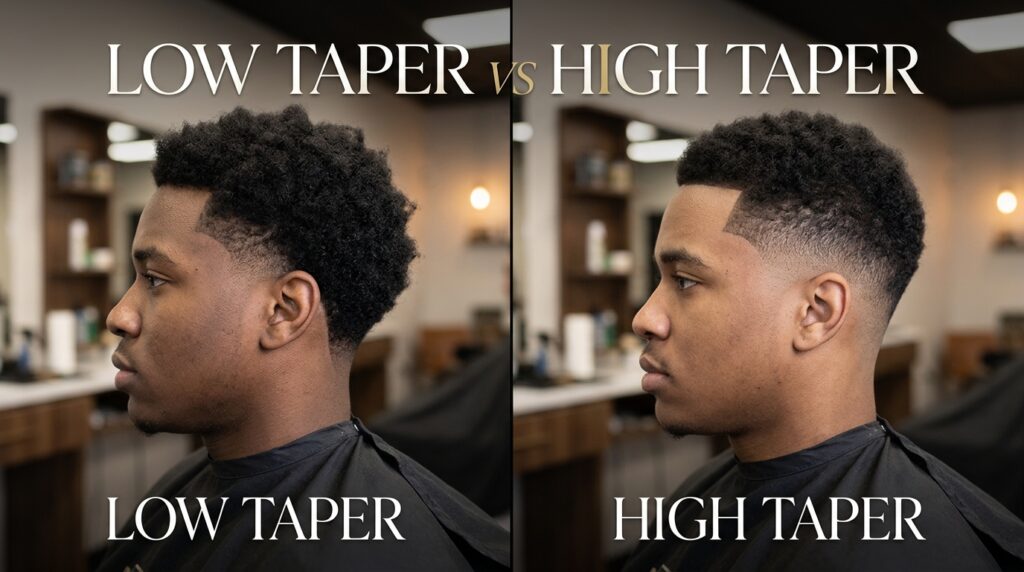
A low taper is subtle. The shortening happens only around the ears and the back of the neck. From the front, many people cannot even tell it is a taper. It is the quietest of the fade family.
A high taper is easier to see. It starts higher and gives the head a more shaped look. The side profile looks cleaner. The top stands out more.
Both cuts share one thing. They avoid a harsh line. The hair blends from longer to shorter in a gentle way. That is what makes them so popular with men who want a polished look without a dramatic change.
| Feature | Low Taper | High Taper |
| Where it starts | Near the ears and neck | Above the temples |
| How visible | Subtle | Clear and sharp |
| Best for | Conservative looks | Modern, styled looks |
| Face shape effect | Keeps width | Adds height and shape |
| Grow-out | Very easy | Easy |
You may also see people search for a high taper fade low version. That usually means a hybrid. The fade begins high but stays soft, then drops low behind the ear. It gives you some of the contrast without the full bold effect. Ask your barber for it by describing exactly where you want the blend to begin.
If you are new to tapers, start low. If you already like a clean look and want more edge, go high.
Who Suits a High Taper Fade?
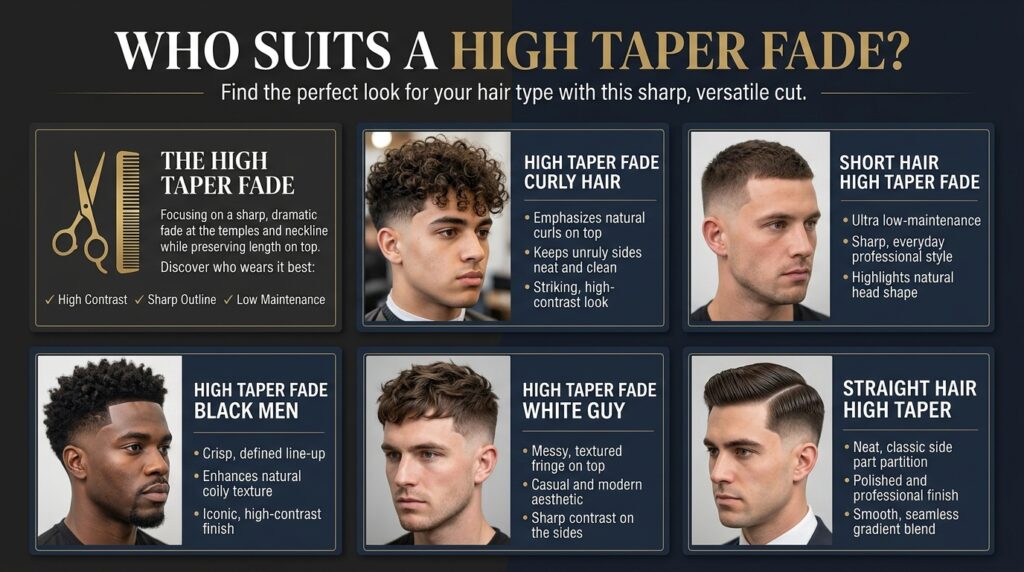
The short answer is almost everyone. The cut works on many ages, hair types, and face shapes. The result changes a little from person to person, so it helps to know what to expect.
It tends to look best on men with oval, square, and round faces. On round faces, the high sides add height and make the face look longer. On square faces, the clean lines match the strong jaw. On long faces, keep the top shorter so you do not add too much height.
Age is not a barrier. Teens love it for its trendy look. Men in their 30s and 40s like it because it looks professional. Older men often choose it to keep thinning hair looking tidy.
Let us look at specific hair types and needs.
High Taper Fade Curly Hair
A high taper fade curly hair combination is a favorite. The tight sides show off the curls on top. The contrast makes the curls look fuller and more defined.
Keep the top at least two to four inches long. This gives the curls room to bounce. Use a curl cream or light gel to cut frizz. Avoid brushing dry curls, because brushing breaks the pattern.
Short Hair High Taper Fade
If you want short hair high taper fade styles, keep the top about one to two inches. A short crop with a taper looks neat and takes almost no work. You can wash it, dry it, and go.
This works well for men who dislike styling. Add a bit of matte clay if you want texture.
High Taper Fade Black Men
A high taper fade Black hairstyle is a classic. It works well on coily and kinky textures. The sharp sides frame a shaped top, such as a short afro, twists, or waves.
For a high taper fade Black male client, a clean line-up around the forehead adds a crisp finish. Moisture matters here. Use a leave-in conditioner and a light oil to keep the top healthy and shiny. Nighttime care with a drug or satin cap keeps waves in place.
High Taper Fade White Guy
A high taper fade white guy style often pairs with a textured crop, a side part, or a quiff. Straight to wavy hair holds these shapes well. A little paste or clay gives lift and control.
Fine hair can look flat. A taper helps because the short sides make the top look thicker.
Straight Hair High Taper
For a straight hair high taper, the top is the star. Straight hair shows every line, so a clean cut matters. Try a side part, a slick back, or a messy crop.
Straight hair can fall flat. Use a light texturizing spray or powder for volume. A blow dryer helps too.
Side and Rear Views Matter
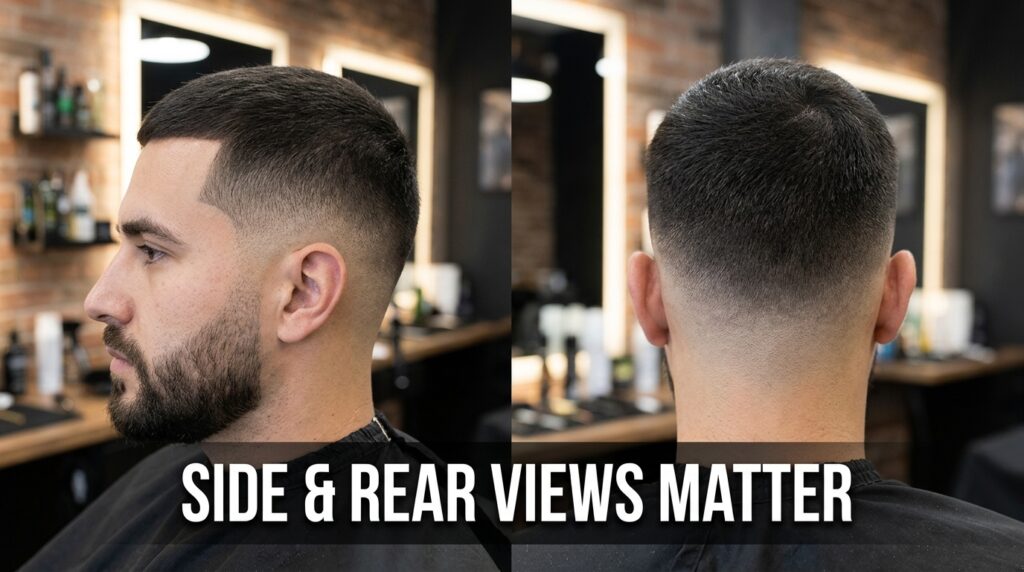
Most men judge a haircut from the front. That is a mistake. People see you from the side and the back far more often than you think.
Check the side view first. Look at where the fade begins. It should rise at a clean angle, not in a messy slope. The line from the temple to the ear should look smooth. Any bumps or patches will stand out.
Then check the back. The neckline is a big deal. A tapered neckline fades into the skin and grows out softly. A blocked neckline has a hard, straight edge and looks sharp at first but grows out fast. A rounded neckline sits in the middle.
Use two mirrors in the chair. Ask your barber to hold a hand mirror behind you. Look at these spots:
- The blend behind the ear
- The height of the fade on both sides
- The balance between the left and right
- The shape of the neckline
- The top, from the back, to see the fall of the hair
Even the best front view can hide a poor back. Take a minute to check before you pay.
High Taper Fade Finishes: Shadow, Zero or Skin
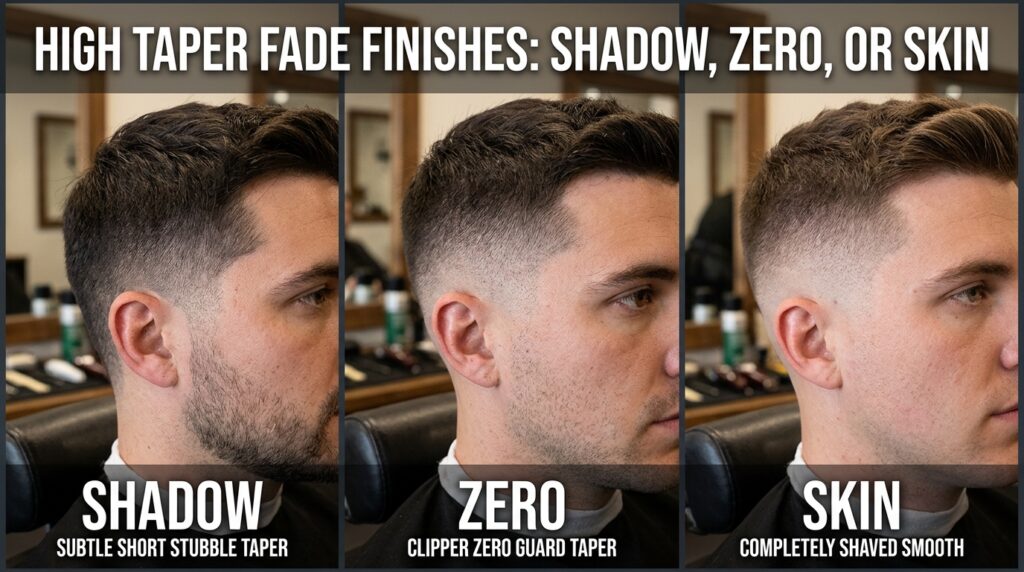
The finish is the shortest length at the bottom of the fade. It changes the mood of the whole cut. You have three common options.
A shadow finish leaves a trace of hair, about a 0.5 or 1 guard. It looks soft and natural. You see a faint shadow on the skin instead of bare skin. It is perfect for work and for men who want a clean but gentle look.
A zero finish uses a bare blade with no guard. The hair is almost gone but not fully shaved. It looks sharper than a shadow and still keeps a little softness. Many men like it as a middle path.
A skin finish uses a foil shaver or razor. The skin shows fully. It gives the strongest contrast and the sharpest look. It also grows out the fastest and shows every bit of regrowth.
| Finish | Look | Contrast | Grow-out |
| Shadow | Soft and natural | Low to medium | Slow, gentle |
| Zero | Clean and crisp | Medium to high | Moderate |
| Skin | Bold and sharp | Very high | Fast, obvious |
Think about your skin too. A skin finish shows razor bumps on some men. If you get irritated, choose a shadow or zero finish. Your barber can also use a gentle shave cream and a cold towel to help.
10 High Taper Fade Styles to Consider
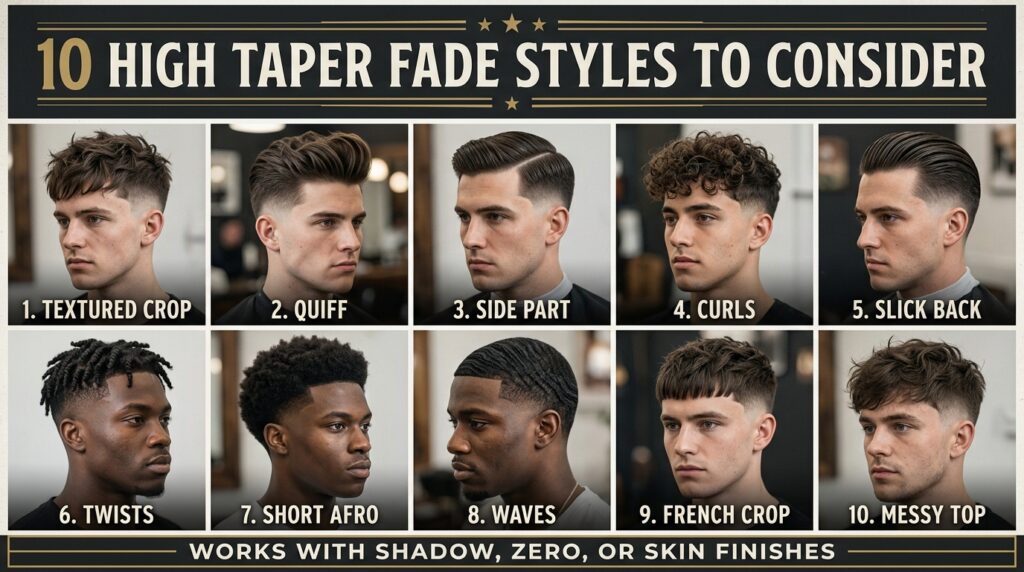
The top of the haircut decides the personality. Below are 10 of the best high taper fade styles for men in 2026. Each one is easy to ask for and easy to wear. Pick the one that fits your hair type, your work, and your daily routine.
1. High Taper with a Textured Crop
This is a short, choppy top with a blunt fringe. It is easy to style and looks young and modern. Use matte clay and push the hair forward.
2. High Taper with a Quiff
The quiff has more length at the front, swept up and back. It adds height and a strong shape. Blow dry it upward and finish with a medium hold product.
3. High Taper with a Side Part
This one looks smart and classic. A hard part line can be shaved in for extra detail. Comb the hair to one side and use a light pomade.
4. High Taper with Curls
Let the curls grow on top and keep the sides tight. Define the curls with cream. This is one of the most eye-catching combos.
5. High Taper with a Slick Back
Grow the top to three or four inches. Comb it back with a firm gel or pomade. The taper keeps the sides neat so the look stays polished.
6. High Taper with Twists
This style is a favorite for men with coily hair. The top holds short or medium twists. The tight sides make every twist stand out. The result looks neat and full of character.
- Best for: Coily and kinky hair.
- Top length: Three to five inches.
- Tip: Retwist every two to three weeks and keep the scalp moisturized.
7. High Taper with a Short Afro
This one is round, full, and bold. The taper frames the afro and keeps the edges crisp. It gives a strong shape without much work.
Shape the top with an afro pick. Lift it gently and let your barber trim the outline. A clean line-up at the forehead adds a sharp finish.
- Best for: Dense, coily hair.
- Top length: Two to four inches.
- Tip: Spray a little water and leave-in conditioner daily to fight dryness.
8. High Taper with Waves
If you love 360 waves, this is a smart pick. The high taper keeps the sides tidy while the waves on top and back take center stage. The look is smooth and polished.
Waves need patience. Brush your hair every day and wear a durag or satin cap at night. Keep the hair moist so the pattern stays deep and shiny.
- Best for: Coily and tightly curled hair.
- Top length: Very short, about half an inch to one inch.
- Tip: Use a soft brush, then a medium brush, for better definition.
9. High Taper with a French Crop
The French crop has a short, textured top with a straight, short fringe. It is simple and sharp. It works well on straight and wavy hair.
This cut suits men with a receding hairline. The short fringe hides the hairline and looks stylish at the same time. Add a small amount of clay for texture.
- Best for: Straight, wavy, or thinning hair.
- Top length: One to two inches.
- Tip: Push the fringe forward while the hair is damp, then let it dry.
10. High Taper with a Messy Top
This style is relaxed and casual. The top is loose, rough, and full of texture. The tight sides keep it from looking sloppy. It is a good balance between neat and carefree.
Use sea salt spray on damp hair. Scrunch it and let it dry naturally. You can also use a bit of texture powder for extra grip and volume.
- Best for: Wavy, curly, or thick hair.
- Top length: Three to four inches.
- Tip: Skip the comb. Use your fingers for a natural, tousled shape.
All 10 styles work with a shadow, zero, or skin finish. Mix and match the top and the finish to find your own look. If you are unsure, show your barber a photo and ask what will work best for your hair type.
How Texture and Density Change the Result
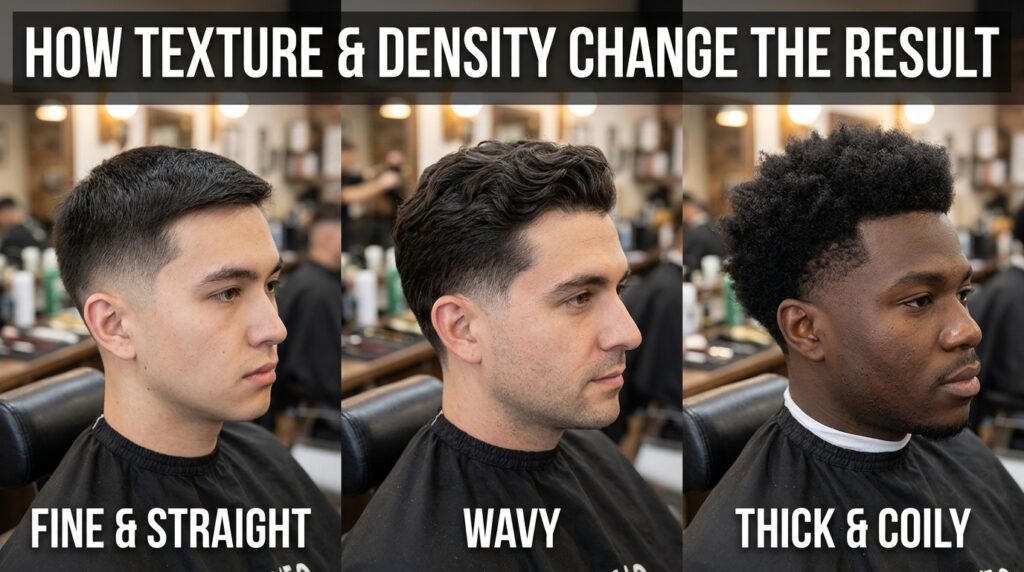
Hair type changes how a fade looks. Two men can ask for the same cut and get different results. Texture and density are the reasons.
Texture is the shape of each strand. Straight hair lies flat. Wavy hair has bends. Curly and coily hair has tight spirals. Density is how many hairs you have on your head. It can be thin, medium, or thick.
Thick, coarse hair holds a fade very well. The blend looks smooth and full. But the sides can puff out fast, so you may need trims sooner.
Fine or thin hair can show scalp through a very tight fade. A shadow finish helps hide this. It keeps a hint of hair at the bottom, so the skin looks softer.
Curly and coily hair shrinks when dry. A top that looks four inches long wet can shrink to two inches. Tell your barber about this so the length turns out right.
| Hair Type | What to Expect | Best Tip |
| Straight, fine | Can look flat on top | Use texture powder |
| Straight, thick | Holds shape well | Thin out the top if bulky |
| Wavy | Natural movement | Use light paste |
| Curly | Shrinks when dry | Keep top 2 to 4 inches |
| Coily | Dense and full | Moisturize daily |
Always tell your barber about cowlicks and thinning spots. A cowlick at the crown or hairline can push hair in odd directions. A good barber will cut around it.
Exact Barber Request
Many bad haircuts come from vague requests. “Just a fade” can mean ten different things. A clear request saves you time and stress.
Here is a simple script you can use. Adjust it for your style.
“I would like a high taper fade. Please start the fade above my temples. Use a shadow finish at the bottom. Keep the top about three inches and textured. Taper the neckline. Leave a natural sideburn, and clean the edges.”
Break it into parts so you do not forget anything:
- Fade type: High taper.
- Starting point: Above the temple, or about two fingers above the ear.
- Finish: Shadow, zero, or skin.
- Top length: Give a number in inches or show a photo.
- Neckline: Tapered, rounded, or blocked.
- Edges: Natural, soft line, or sharp line-up.
- Sideburns: Keep, trim, or fade.
Bring pictures. Photos remove confusion. Show the front, side, and back if you can. If your barber suggests changes, listen. They know how your hair grows.
Speak up during the cut. If the fade looks too high, say so early. It is much easier to adjust in the middle than to fix at the end.
Maintenance and Grow-Out
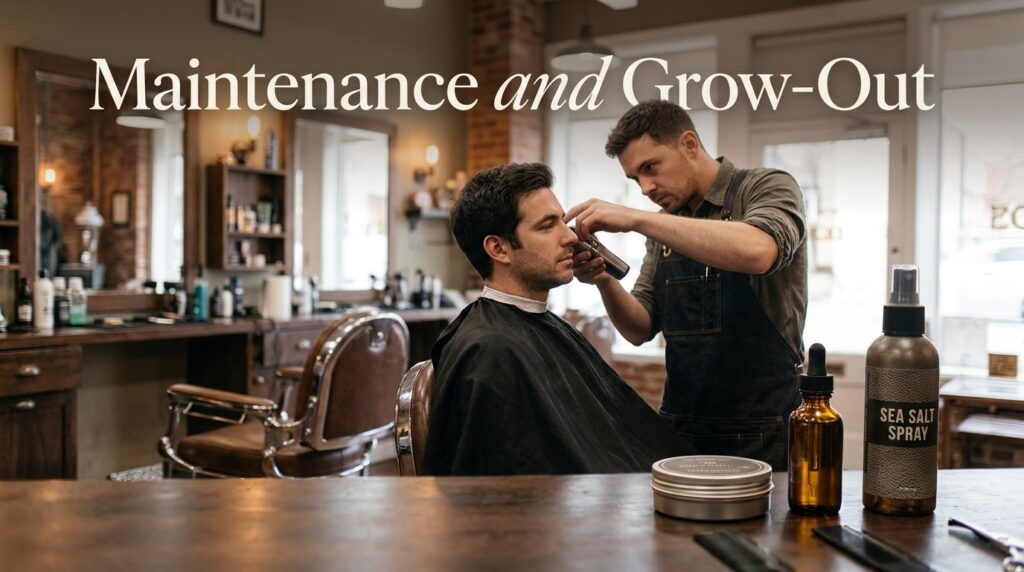
A high taper looks best when it is fresh. The short sides lose their shape in a couple of weeks. Plan on regular visits.
For most men, a trim every two to three weeks keeps the cut sharp. A skin finish may need a visit every two weeks. A shadow finish can stretch to three or four weeks. If you want the look to stay perfect, book your next appointment before you leave.
Daily care is simple. Wash with a gentle shampoo two to three times a week. Condition if your hair is dry or curly. Use a light product on top. Do not overdo gel or wax, since buildup makes hair dull.
Here is a quick routine:
- Wash and condition as needed.
- Towel dry gently.
- Apply a small amount of product.
- Shape with fingers, comb, or brush.
- Check the neckline and sides in a mirror.
Growing out is easy with a taper. The change is gradual, so you do not get an awkward moment. If you want to grow the sides, tell your barber. They can trim only the edges and keep the shape clean while the length builds up.
At home, you can tidy the neckline with a trimmer. Do not touch the fade line itself. That area needs a pro. A small mistake can ruin the blend.
Common High Taper Mistakes
Even a great cut can go wrong. Here are the mistakes men make most often, and how to avoid them.
Going too high. A fade that starts too far up the head can look odd, especially on narrow heads. Stay near the temple line unless you want a bold look.
Ignoring head shape. Every head has bumps and curves. A good barber blends around them. If your barber ignores them, the fade may look patchy.
Choosing the wrong finish. A skin finish on sensitive skin leads to bumps and redness. Pick a finish that matches your skin and your lifestyle.
Skipping the back view. A neat front can hide a messy neckline. Always check the back before you leave.
Using too much product. Heavy wax or gel can weigh the top down and cause flakes. Use a pea-sized amount first.
Waiting too long between cuts. Once the sides grow out, the fade loses its edge. Keep a regular schedule.
Not saying what you want. Photos and clear words help. A short chat before the cut prevents most issues.
If something goes wrong, do not panic. Hair grows back. A good barber can often fix a small mistake by blending the area again.
Frequently Asked Questions
What is a high taper fade?
A high taper fade is a haircut where the sides start shortening high on the head, near the temples. The hair blends smoothly down to the neck.
What is the difference between a high taper and a high fade?
A high taper keeps a bit more length and looks softer. A high fade goes shorter, often to skin, and has a bolder contrast.
How often should I get a high taper fade trimmed?
Most men need a trim every two to three weeks. Skin finishes may need a visit every two weeks.
Does a high taper fade work on curly or Black hair?
Yes. It works very well on curly, coily, and textured hair. The short sides make the top look fuller and more defined.
How do I ask my barber for a high taper fade?
Say where the fade should start, the finish you want, the top length, and the neckline style. Bring photos to make it easier.
Final Thoughts
The high taper fade is clean, flexible, and easy to wear. It suits many hair types, from straight to coily. You can keep it soft with a shadow finish or make it bold with skin. You can pair it with a crop, a quiff, curls, or waves.
The best results come from a few simple steps. Know your hair type. Pick the right finish. Give your barber a clear request. Then keep up with regular trims. Do these things and your high taper will look sharp all year long in 2026.

Adam Collins is a fashion writer and content researcher at Faxhion Serp. He focuses on fashion trends, clothing, styling ideas, accessories, and practical wardrobe guidance. Adam creates clear, well researched articles designed to help readers understand fashion topics, discover fresh ideas, and make informed style choices.