
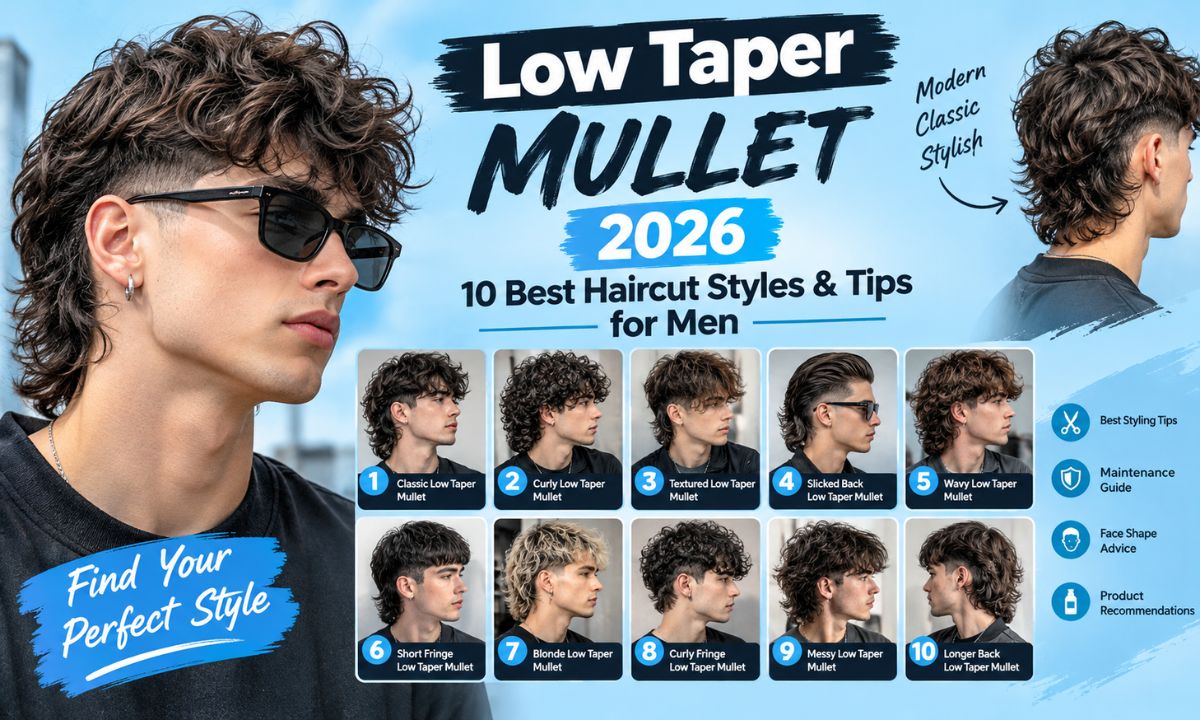
The mullet is back, and it looks sharper than ever. But the 2026 version is not the wild, messy cut your dad wore in the 80s. Today’s version is clean, controlled, and easy to wear. The low taper mullet leads this trend.
This cut gives you short, neat sides and a longer back with real personality. It works at the gym, at the office, and on a Saturday night. It also grows out well, which is a big win for busy guys.
In this guide, you will learn what a low taper mullet is, who should get one, and which styles look best. You will also get styling steps, product picks, maintenance tips, and common mistakes to avoid. Bring this article to your barber and you will walk out with a cut you love.
What Is a Low Taper Mullet?

A low taper mullet is a haircut that mixes a low taper with the classic mullet shape. The sides and back start short near the ears and neckline. The hair then fades gently into the longer lengths on top and at the back.
The word “low” matters here. The taper begins low on the head, just above the ear and along the neck. It does not climb high up the sides. This keeps the look soft and natural instead of harsh.
Think of it as two cuts in one. The front and top stay full and styled. The back keeps its length, but the edges around it stay tight and clean. That contrast is what makes the cut so eye-catching.
Here is a quick breakdown of the main parts:
- Sides: Short and tapered, usually blended with clippers.
- Neckline: Clean and tight, often with a soft taper.
- Top: Medium length, with texture or layers.
- Back: Longer, with hair that falls past the neckline.
The best part is how flexible it is. You can go subtle or bold. You can keep the back just a few inches long or let it grow past your collar. Your barber can adjust it to fit your face and your lifestyle.
Who Should Try a Low Taper Mullet?
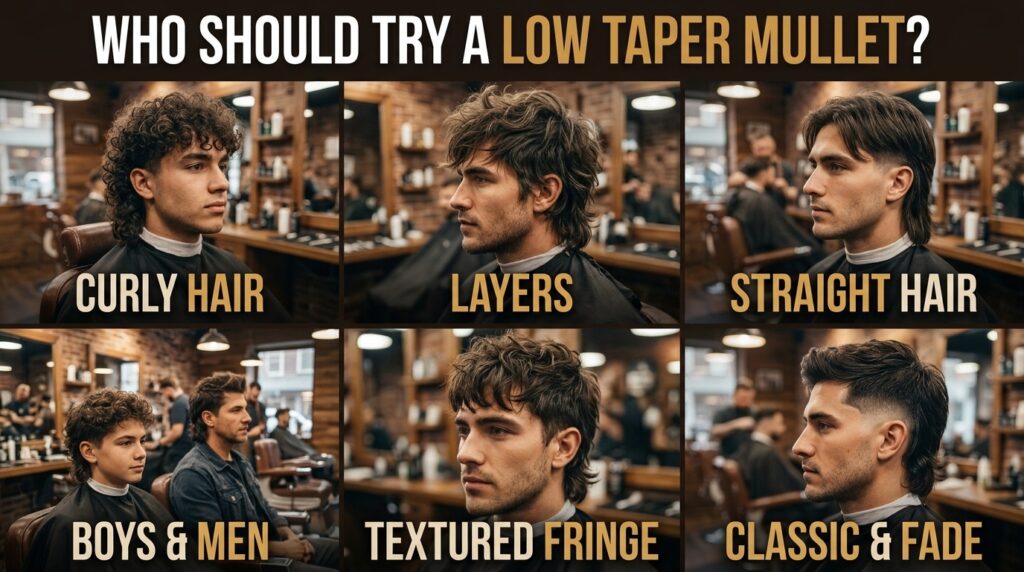
Almost any man can pull off this cut with the right tweaks. It suits many hair types, ages, and face shapes. The key is to match the cut to your hair texture and your daily routine.
If you like a clean look but want something more fun than a standard fade, this is a great pick. It also works well if you are growing out your hair but still want it to look neat. The tapered sides keep everything tidy while the length catches up.
Below are the most common hair types and groups that wear this cut well.
Low taper mullet curly hair
Curly hair and a mullet are a natural match. Curls add volume and movement to the back, which makes the shape pop. The low taper keeps the sides tight so your curls do not puff out too wide.
Ask your barber to leave extra length on top so the curls can form. Keep the back a bit longer to show off the texture. A good curl cream will help define each curl and cut down on frizz.
Low taper mullet with layers
Layers add shape and weight control. They stop the hair from looking flat or heavy. On a mullet, layers create a smooth flow from the top to the back.
This works well for men with thick hair. Layers remove bulk and make the style easier to manage. They also help thin hair look fuller by adding lift at the crown.
Low taper mullet straight hair
Straight hair gives the cut a sleek, modern look. Because straight strands lie flat, the taper lines stand out clearly. The back falls in a smooth, even sweep.
The main challenge is volume. Straight hair can fall flat on top. A light texture spray or sea salt spray adds grip and body. Ask your barber to add choppy layers for extra movement.
Low Taper mullet Boys
Boys and teens love this cut because it is trendy and easy to care for. The low taper keeps the sides neat for school, while the longer back adds a little edge. Parents like that it does not need much daily work.
For younger boys, keep the back shorter and the top easy to comb. A simple wash and a dab of light paste is enough. Always check school hair rules before choosing the length.
Low taper mullet men
For grown men, this cut looks bold but still professional when done well. It fits guys in their 20s, 30s, 40s, and beyond. A softer taper and a shorter back keep it mature.
Men with a receding hairline can also wear it. Longer hair on top can help balance the front. Talk to your barber about a shape that suits your hairline.
Low Taper Mullet Textured fringe
A textured fringe adds a stylish front to the mullet. The hair on your forehead is cut short and choppy. It gives the look a modern, street-style feel.
This pairing works best for medium to thick hair. It suits oval, square, and long faces. If you have a very high forehead, a fringe can help balance your face.
Read More: Best Mexican Mullet Haircuts for Men
Low taper mullet
The classic version is the best place to start. It keeps the sides short, the top medium, and the back moderately long. It is simple, clean, and easy to explain to your barber.
If this is your first mullet, start here. You can always go longer or edgier later. A simple low taper mullet is a safe and stylish first step.
Low taper mullet fade
A fade version pushes the sides a bit tighter. The hair goes from very short skin-level lengths to longer hair on top. It gives a sharper, more defined finish.
This is a good pick for guys who like a crisp barbershop look. It needs more frequent touch-ups, though. Plan to visit your barber every few weeks to keep the fade fresh.
Low taper mullet haircut
When you ask for a low taper mullet haircut, be clear about your lengths. Tell your barber how short you want the sides and how long you want the back. Photos make this much easier.
A good haircut starts with a good talk. Bring two or three pictures and point out what you like in each. That small step saves you from surprises in the chair.
Benefits of a Low Taper Mullet
This cut has become popular for good reasons. It looks stylish, but it also solves real hair problems. Here are the main benefits.
First, it is versatile. You can dress it up or down. Slick it back for dinner, or mess it up for a night out. One cut gives you many looks.
Second, it keeps a neat outline. The tapered neckline and sides stop the hair from looking shaggy. Even when the top and back are long, the edges look sharp. This is what separates a modern mullet from an old one.
Third, it grows out gracefully. Many haircuts look bad when they grow past their prime. The low taper mullet looks fine even at week six or seven. That saves you time and money.
More benefits include:
- Works with many hair types: Curly, wavy, straight, thick, and fine hair all work.
- Flatters many face shapes: Layers and length can balance round, square, or long faces.
- Easy to personalize: Add a fringe, a beard, or a fade.
- Low daily effort: Most styles take under five minutes.
- Trendy but timeless: It looks current without feeling like a gimmick.
Finally, it adds confidence. A good haircut changes how you carry yourself. Many men say the mullet makes them feel bolder and more creative.
10 Best Low Taper Mullet Hairstyles

Here are ten of the best styles to try in 2026. Each one has its own mood, so pick the one that fits your hair and your personality. Use the quick table below to compare them at a glance.
| Style | Best For | Maintenance Level |
| Classic Low Taper Mullet | First-timers | Low |
| Textured Low Taper Mullet | Thick or wavy hair | Medium |
| Curly Low Taper Mullet | Curly and coily hair | Medium |
| Low Taper Mullet with Fringe | Bold, modern looks | Medium |
| Low Taper Fade Mullet with Beard | Guys with facial hair | High |
| Layered Low Taper Mullet | Thick hair needing shape | Medium |
| Slick Back Low Taper Mullet | Formal settings | Medium |
| Short Low Taper Mullet | Conservative workplaces | Low |
| Wavy Low Taper Mullet | Natural waves | Low |
| Long Flow Low Taper Mullet | Growing out hair | Medium |
Classic Low Taper Mullet
The classic style is clean and balanced. The sides are short and tapered low. The top is medium length, and the back sits just past the neckline.
This look is simple to wear and simple to explain. It suits almost every hair type. If you want a cut that works everywhere, this is it.
Style it with a light cream or paste. Comb it back or let it fall naturally. It looks good with a t-shirt or a suit.
Textured Low Taper Mullet
Texture is what gives the mullet its modern edge. Your barber uses scissors or a razor to cut small, uneven layers. The result is hair with grit, movement, and shape.
This style is great for thick and wavy hair. It hides cowlicks and gives flat hair body. A matte clay or sea salt spray brings the texture to life.
Do not over-brush it. Run your fingers through it and let the hair fall where it wants. The messy finish is the point.
Curly Low Taper Mullet
This style celebrates natural curls. The top and back keep their length so the curls can bounce. The tapered sides keep the shape tidy and balanced.
Curls need moisture. Use a leave-in conditioner and a curl cream after washing. Let your hair air dry or use a diffuser on low heat.
A curly mullet looks full and playful. It also helps tame wide, puffy curls that grow outward on the sides. The taper gives your head a better shape.
Low Taper Mullet with Fringe
Adding a fringe brings the style forward. The front hair falls onto the forehead in a short, choppy line. It frames the face and adds attitude.
This style works well with straight and wavy hair. Ask for a blunt or textured fringe, depending on how bold you want to go. A shorter fringe looks edgy. A longer one looks softer.
Keep your fringe trimmed. If it gets too long, it can fall into your eyes. A quick fringe trim every few weeks keeps it sharp.
Low Taper Fade Mullet with Beard
A beard and a mullet make a strong pair. The low taper on the sides blends smoothly into your beard. This creates one clean, connected look from head to face.
Ask your barber to fade the sideburns into the beard line. This avoids harsh gaps. A tidy beard balances the length at the back of your head.
Keep your beard neat. Trim the neckline and cheek lines often. Use beard oil to keep the hair soft and healthy.
Layered Low Taper Mullet
This version focuses on soft, flowing layers. The layers start on top and travel down to the back. They remove weight and let the hair move freely.
It suits men with thick, heavy hair. It also helps fine hair look fuller. The layers create a rounded shape that frames the face.
Use a light mousse for volume. A blow dryer and a round brush can add lift at the crown. Keep the finish natural and airy.
Slick Back Low Taper Mullet
This is the polished option. The top is combed back with product, and the back is left long and smooth. The tapered sides give it a sharp, clean outline.
It is a great pick for weddings, events, and office days. Use a medium-hold pomade or styling cream. Comb your hair back while it is slightly damp.
The slick back look shows off your forehead and cheekbones. It works best on straight to slightly wavy hair.
Short Low Taper Mullet
Not ready to go long? A short mullet is the answer. The back is only a little longer than the sides. It gives a hint of mullet without the full commitment.
This style is perfect for conservative workplaces. It looks neat and professional. It also needs very little styling.
You can always grow it out later. Many men start with the short version and slowly add length with each visit.
Wavy Low Taper Mullet
Natural waves give this style a relaxed, beachy feel. The hair bends and flows around the tapered sides. It looks effortless, even when you spend very little time on it.
Use a light sea salt spray to boost the waves. Scrunch your hair gently as it dries. Avoid brushing it too much, which can cause frizz.
This style suits warm weather and casual wear. It is also very forgiving as it grows out.
Long Flow Low Taper Mullet
For the bold, this style lets the back grow long. The hair flows past the collar and sometimes down to the shoulders. The low taper at the sides keeps it from looking messy.
This is a favorite among creative and fashion-minded guys. It needs patience and good hair care. Split ends can make long hair look dull, so trim it often.
Keep the length healthy with regular conditioning. A small amount of leave-in oil adds shine and softness.
How to Style a Low Taper Mullet
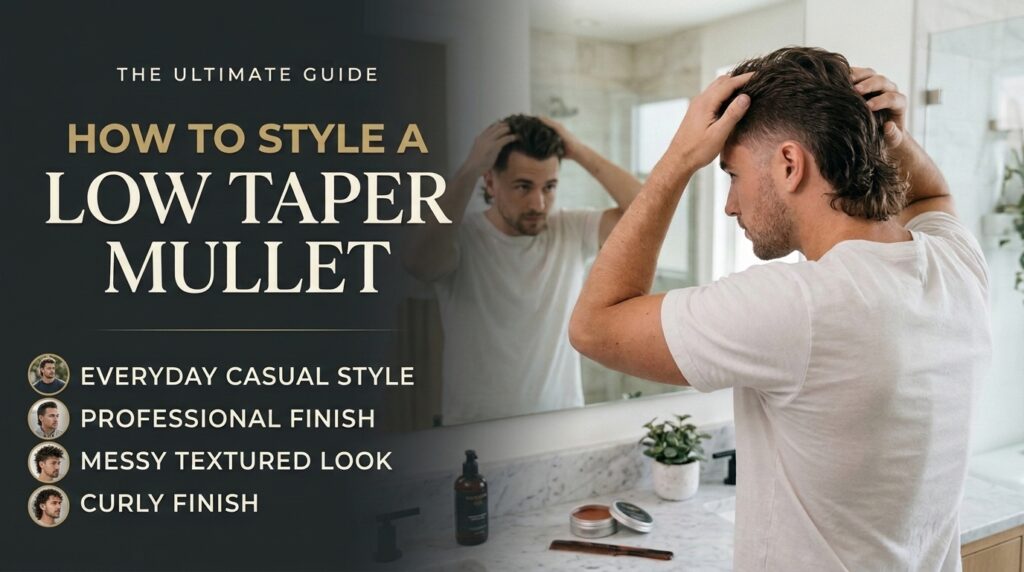
Styling is simple once you know the basics. Start with clean, damp hair. Apply product from the back to the front, and shape it with your fingers or a comb.
Most men can style this cut in about five minutes. The goal is to highlight the shape, not hide it. Let the contrast between the short sides and longer back stand out.
Here are four easy ways to style it for different moments.
Everyday Casual Style
This is the go-to look for most days. It is quick, relaxed, and low effort. It works for errands, school, work from home, and weekends.
Follow these steps:
- Towel dry your hair until it is slightly damp.
- Add a small amount of light paste or cream.
- Rub it between your palms.
- Run your fingers through your hair from front to back.
- Let it air dry or use a quick blast of cool air.
Keep the finish loose and natural. A little movement looks better than a stiff style.
Professional Finish
A clean version works well for the office. The idea is to keep it neat while still showing the cut. You can look sharp without losing your style.
Try this approach:
- Apply a medium-hold pomade or styling cream to damp hair.
- Comb the top back or to the side.
- Smooth the back so it lies flat.
- Tuck the hair behind your ears if it is long enough.
- Finish with a light-hold spray for control.
This look suits meetings, interviews, and events. It shows polish while keeping the mullet shape intact.
Messy Textured Look
This is the bold, street-style finish. It is perfect for nights out, concerts, and social events. The more texture, the better.
Use a matte clay or texture powder. Apply it to dry hair, and work it through with your fingers. Tousle the top and the back until you like the shape.
Add a sea salt spray first if your hair is fine. It gives extra grip and volume. Do not use too much product, or the hair will look stiff and heavy.
Curly Finish
Curly hair needs a different routine. The goal is to define curls and fight frizz. Start with wet hair for the best results.
Here is a simple method:
- Apply a leave-in conditioner to damp hair.
- Add a curl cream, working it through from root to tip.
- Scrunch your curls upward to boost shape.
- Air dry or use a diffuser on low heat.
- Do not touch the curls until they are fully dry.
Once dry, gently fluff the top with your fingers. This adds volume without frizz.
Best Hair Products for a Low Taper Mullet

The right product makes the cut look its best. You do not need a shelf full of products. A few good basics will do the job.
Match the product to your hair type and the look you want. Fine hair needs light products. Thick hair can handle stronger holds. Curly hair needs moisture first.
Product
Here are the main product types to consider. Each one has a clear job.
- Sea salt spray: Adds beachy texture and volume.
- Matte clay: Gives strong hold with a flat, natural finish.
- Styling paste: Offers flexible hold and light shine.
- Pomade: Gives a slick, polished look.
- Curl cream: Defines curls and reduces frizz.
- Leave-in conditioner: Adds moisture and protects hair.
- Heat protectant spray: Shields hair from blow dryers and irons.
- Light hairspray: Locks the style in place without stiffness.
Purpose
Use this table to choose the right product for your goal.
| Product | Purpose | Best For |
| Sea salt spray | Adds texture and body | Fine, straight, or wavy hair |
| Matte clay | Strong hold, no shine | Messy, textured looks |
| Styling paste | Flexible hold, light shine | Everyday casual style |
| Pomade | Smooth, polished finish | Slick back and professional looks |
| Curl cream | Defines curls, cuts frizz | Curly and coily hair |
| Leave-in conditioner | Moisture and softness | Dry, long, or curly hair |
| Heat protectant | Prevents heat damage | Anyone who blow dries |
| Light hairspray | Holds the final shape | All styles |
Start with one or two products. Add more only if you need them. Using too many can weigh your hair down.
Maintenance Tips
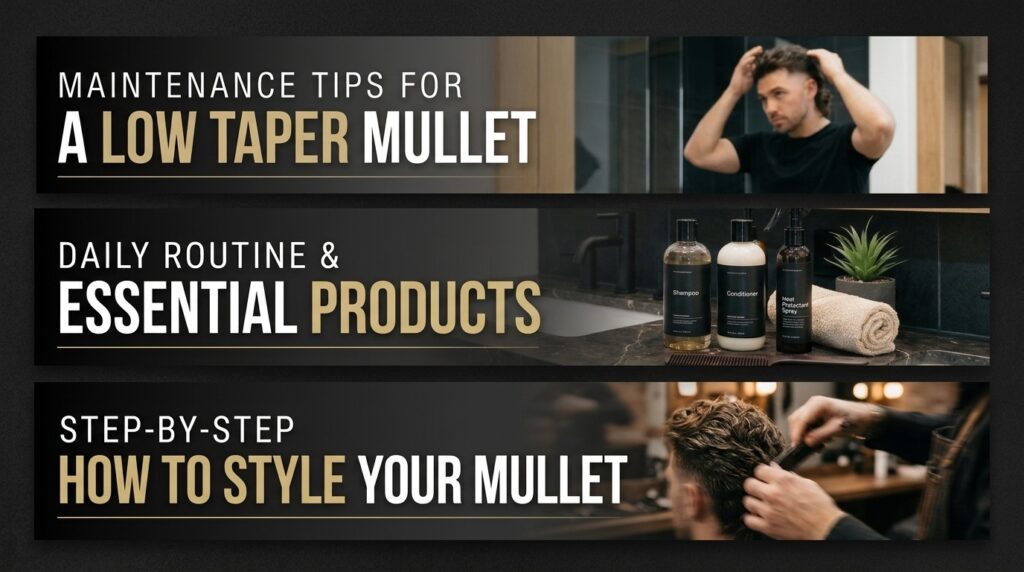
A great haircut still needs care. With a few simple habits, your mullet will stay fresh for weeks. Good care also keeps your hair healthy and strong.
The tips below are easy to follow. They fit into any busy routine.
Visit Your Barber Every 4–6 Weeks
The taper is the first part to lose its shape. Within a few weeks, the sides and neckline grow fuzzy. A regular visit keeps the lines crisp.
Book your next appointment before you leave the chair. This makes sure you never go too long between cuts. If you wear a fade, you may need a visit closer to every four weeks.
Between visits, you can clean up the neckline at home with a trimmer. But leave the shaping to your barber.
Wash Hair Properly
Do not wash your hair every single day. Too much washing strips natural oils and dries the scalp. Two to four times a week is enough for most men.
Use a gentle shampoo and focus on the scalp. Massage with your fingertips, not your nails. Rinse well so no residue is left behind.
Curly hair can go even longer between washes. Use a moisturizing shampoo and rinse with lukewarm water. Hot water can dry out your strands.
Condition Regularly
Longer hair needs more moisture. The conditioner keeps it soft, smooth, and easy to manage. It also helps stop tangles at the back.
Apply conditioner from the mid-length to the ends. Leave it on for two to three minutes. Rinse with cool or lukewarm water.
Once a week, try a deep conditioning mask. This is especially helpful for curly, dry, or color-treated hair. Healthy hair holds a style much better.
Avoid Heavy Styling Products
Too much product causes buildup. Your hair can look greasy, flat, and dull. It can also clog your scalp and cause itching or flakes.
Start with a pea-sized amount. You can always add more if needed. Choose water-based products that rinse out easily.
Wash out your styling products at the end of the day if you can. Let your scalp breathe overnight.
Protect Hair from Heat
Blow dryers, straighteners, and curling irons can all damage hair. Heat weakens the strands and causes split ends. This shows up fast on the longer back section.
Always use a heat protectant spray first. Keep your dryer on medium or low settings. Hold it a few inches away from your hair.
Let your hair air dry when you can. It is the gentlest option, and it saves you time.
Common Mistakes to Avoid
Even a great cut can go wrong if you make a few simple mistakes. Here are the most common ones, and how to avoid them.
- Skipping the consultation: Always talk to your barber first. Explain how long you want each section.
- Going too high with the taper: A high taper can look harsh. Keep it low for a softer blend.
- Leaving the back too heavy: A bulky back looks messy. Ask for layers or thinning.
- Using too much product: Heavy gels and waxes make the hair look stiff and dated.
- Ignoring your hair type: A cut that works on straight hair may not work on curls. Choose a style that fits your texture.
- Waiting too long between trims: The edges lose shape fast. Stick to a four to six week schedule.
- Forgetting the neckline: A messy neckline ruins the whole look. Keep it clean and tight.
- Skipping conditioner: Long hair gets dry and frizzy without moisture.
- Copying a photo exactly: Your hair density, hairline, and face shape are unique. Let your barber adjust the cut.
- Brushing curly hair when dry: This causes frizz. Use your fingers or a wide-tooth comb on damp hair.
Fixing these small things makes a big difference. Your mullet will look more polished, and it will last longer between cuts.
Low Taper Mullet vs Other Popular Mullet Haircuts

The low taper mullet is not the only modern mullet. Two close cousins are the mid taper mullet and the burst fade mullet. Each has its own look and feel.
Knowing the differences helps you choose the right one. It also helps you ask your barber for exactly what you want.
Feature
The table below compares the three cuts side by side.
| Feature | Low Taper Mullet | Mid Taper Mullet | Burst Fade Mullet |
| Taper starting point | Low, near the ear and neck | Middle of the sides | Curves around the ear |
| Overall look | Soft and natural | Clean and balanced | Bold and dramatic |
| Best hair type | All types | Straight and wavy | Curly and thick |
| Maintenance | Low to medium | Medium | High |
| Workplace friendly | Very | Fairly | Less so |
| Grow-out time | Looks good for 6+ weeks | Needs trimming at 4 to 5 weeks | Needs trimming at 3 to 4 weeks |
Low Taper Mullet
This is the most subtle and easy to wear. The short sides stay close to the ear and neck. It blends in a gentle way and does not draw too much attention to the fade.
It is perfect for first-time mullet wearers. It also works well in office settings.
Mid Taper Mullet
The mid taper starts higher on the sides. This shows more of the fade and gives a bit more contrast. The look is sharper and a little more modern.
It suits men who want a clearer taper line. It needs a bit more upkeep than the low version.
Burst Fade Mullet
The burst fade curves around the ear in a half-circle shape. It leaves the hair at the back long and full. The effect is dramatic and stylish.
This cut looks amazing on curly and thick hair. It is the boldest of the three. It also needs the most frequent trims to keep the curve sharp.
Pros and Cons of a Low Taper Mullet
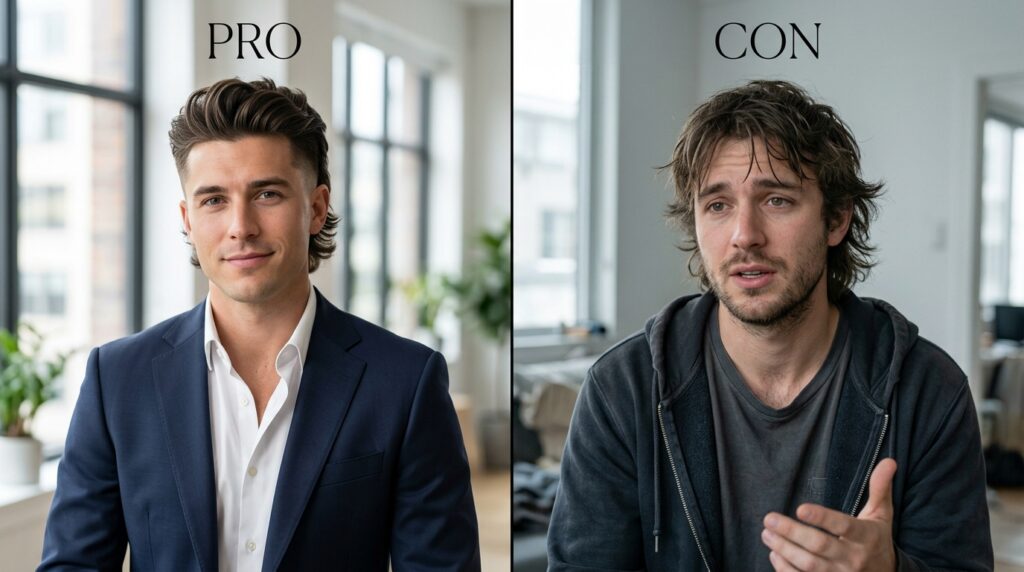
Every haircut has strengths and weak spots. Here is an honest look at both sides. Use it to decide if this style is right for you.
Pros
- Very versatile: Works for casual, formal, and creative settings.
- Suits many hair types: Straight, wavy, curly, thick, or fine hair can all work.
- Clean and neat: The taper keeps the edges sharp.
- Grows out well: It does not look bad when it gets a little long.
- Easy to style: Most looks take only a few minutes.
- Adds personality: It stands out without being too extreme.
- Pairs well with beards: The taper blends smoothly into facial hair.
Cons
- Needs regular trims: The neckline and sides need upkeep every four to six weeks.
- Takes time to grow: If your hair is short, you must wait for the back to lengthen.
- Not for every workplace: Some strict dress codes may not allow longer back hair.
- Requires a skilled barber: A poor blend can look uneven.
- May feel warm in summer: Longer back hair can feel hot in high heat.
- Needs good care: Long hair needs conditioner and gentle handling.
If the pros match your lifestyle, give it a try. The cons are small and easy to manage with a little planning.
Frequently Asked Questions
What is a low taper mullet haircut?
It is a mullet with short, tapered sides that start low near the ears and neck. The top and back stay longer for a bold, clean look.
How often should I get a low taper mullet trimmed?
Most men should visit their barber every four to six weeks. This keeps the taper and neckline sharp.
Does a low taper mullet work for curly hair?
Yes. Curly hair adds volume and shape to the mullet. The low taper keeps the sides tidy while the curls stay full on top and at the back.
Is a low taper mullet good for work or the office?
Yes. A shorter back and a neat finish look professional. Style it with pomade or cream for a polished result.
What products should I use on a low taper mullet?
Use sea salt spray or matte clay for texture, and pomade for a slick finish. Curly hair does best with curl cream and leave-in conditioner.
Final Thoughts
The low taper mullet is one of the best haircuts for men in 2026. It mixes a clean, tapered shape with the fun and edge of a mullet. It suits many hair types, from straight to curly, and it works for school, work, and weekends. With ten styles to choose from, there is something for every man.
The secret to a great mullet is good communication and good care. Bring photos to your barber, pick the right products, and stick to a trim schedule. Do that, and your haircut will look sharp every day. Be confident, wear it your way, and enjoy the new look.

Adam Collins is a fashion writer and content researcher at Faxhion Serp. He focuses on fashion trends, clothing, styling ideas, accessories, and practical wardrobe guidance. Adam creates clear, well researched articles designed to help readers understand fashion topics, discover fresh ideas, and make informed style choices.