

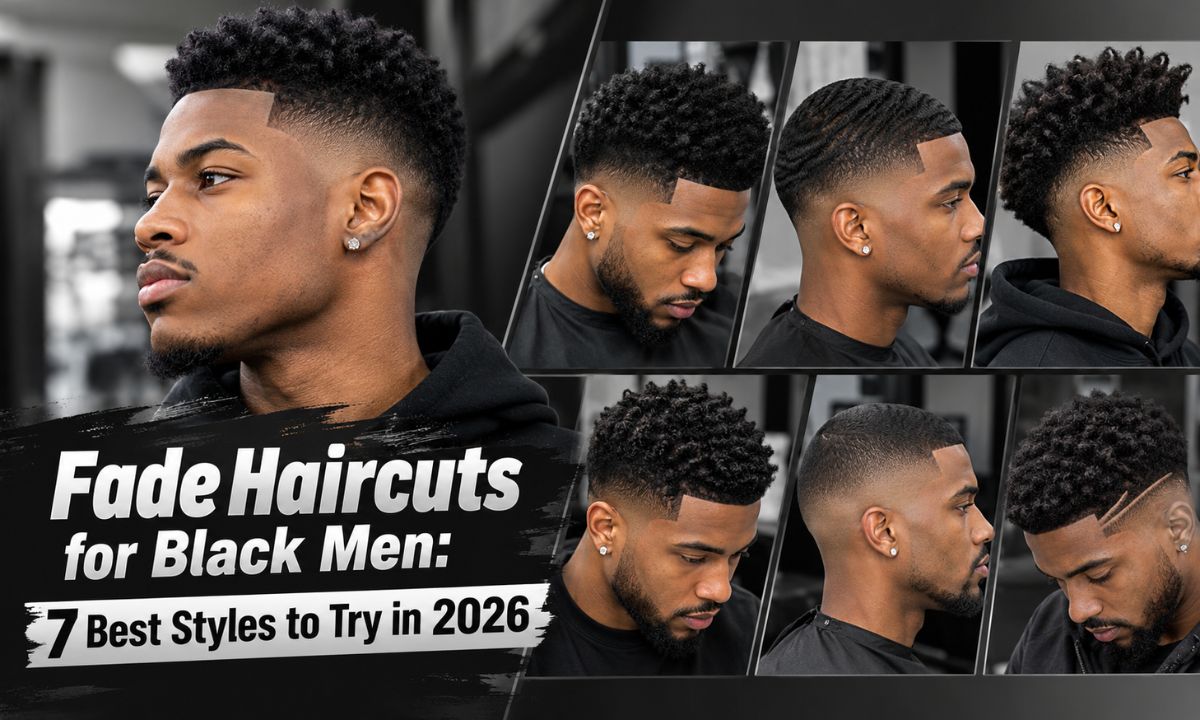
A fresh fade can change how you look in one visit. The sharp edges, the clean neck and the smooth blend make any face look more put together. That is why fades remain the most requested cut in barbershops across the United States.
But a good fade is not one single haircut. There are many types, and each one works differently on coily, curly and wavy hair. The right pick depends on your head shape, hair texture, hairline, job and daily routine.
This guide breaks it all down in simple terms. You will learn how fade placement works, see seven styles worth trying in 2026, and get tips on hairlines, textures, barber requests and upkeep. Read it once, then screenshot the parts you need for your next appointment.
Fade Haircuts for Black Men: Start With Placement
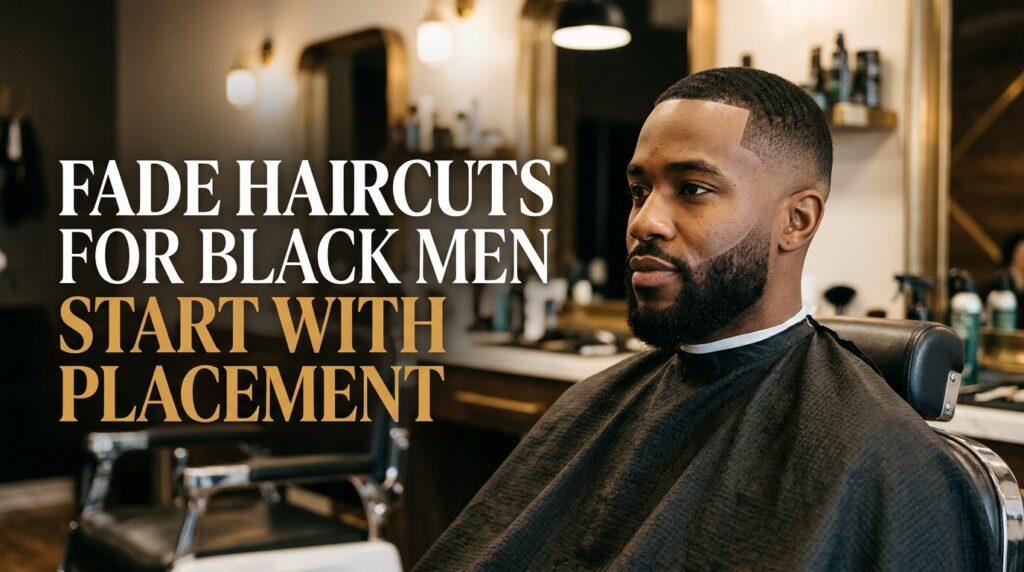
Placement is where the fade begins on your head. It is the first decision you should make. Everything else, including the top style and the finish, depends on it.
Think of your head in three zones. The bottom zone sits around the ears and neck. The middle zone runs along the sides at temple level. The top zone is the crown area where the hair stays long. A fade moves from very short hair at the bottom to longer hair above.
Here is a quick view of how placement changes the look.
| Placement | Where the fade starts | Overall look | Best for |
| Low | Just above the ear and neck | Soft and subtle | Office settings, first-time fades |
| Mid | Around the temple | Balanced and clean | Almost everyone |
| High | Near the upper temple or crown | Bold and sharp | Strong style statements |
Most barbers will ask you to pick one of these three. If you are unsure, start in the middle and adjust next time. A mid placement is the safest starting point because it suits most head shapes.
Mid Fade Fringe
A mid fade fringe pairs a mid-height fade with a short, forward-styled top. On Black hair, this often means a short coily or curly fringe that sits just above the forehead. It looks modern without trying too hard.
This style works well if you want something fresh but not extreme. The fringe adds texture, and the mid fade keeps the sides clean. Use a light curl cream to define the top. Ask your barber to keep the front soft so the hairline does not look harsh.
Mid Fade Haircuts for Black Men
A mid fade is the all-rounder of the fade world. It starts around the temple and blends down to the skin or a very short length. It frames the face well and works with waves, curls, twists and short afros.
If you wear a suit to work and a fitted cap on weekends, this is your cut. It looks neat in a meeting and cool at the gym. It also grows out in a gentle way, so you can wait a little longer between visits.
Medium Fade Haircuts for Black Men
Some people search for a medium fade when they mean a mid fade. Others mean a fade that keeps a little more length on the sides. Both are fine. The key is to tell your barber the exact guard sizes or show a photo.
A medium fade can leave the sides at a number 1 or 2 at the top of the blend. That gives you a softer look than a skin fade. It also hides small patches and uneven hair growth better, which helps if your hair grows in different directions.
Low Fade Haircuts for Black Men
A low fade starts just above the ear and wraps around the back of the head. It is quiet and classic. People will notice you look sharp, but they may not know why.
This style suits men who want a clean cut with little drama. It also lets you keep more hair on the sides, which helps if you have a narrow face or a long head shape. A low fade works nicely with waves, a Caesar cut or a short twist-out.
Low Fade Haircut Black Boy
Kids and teens also love fades. A low fade is a great choice for boys because it is neat, simple and easy to manage. It keeps the sides tidy while leaving enough hair on top for a short sponge cut, a small afro or soft curls.
When you take a boy to the barber, keep a few things in mind:
- Ask for a gentle blend instead of a harsh skin line.
- Choose a guard number 2 or 3 at the lowest point for young, sensitive skin.
- Skip razor lines near the forehead if his skin bumps easily.
- Bring a photo so the barber knows the exact look.
Good habits start young. Show him how to brush his hair and moisturize his scalp. That will make every future cut look better.
Short Fade Haircuts for Black Men
A short fade keeps the whole head low and tidy. The top is cropped close, often to about half an inch to one inch. It looks sharp and takes almost no styling time.
This is a great pick for busy mornings. You can wake up, rinse and go. It also suits men who work with their hands, play sports or wear helmets. Short hair is easy to keep clean and stays cool in summer.
Read More: Mid Taper Fade Textured Fringe
Skin Fade Black Male
A skin fade, also called a bald fade, drops all the way down to bare skin at the bottom. The contrast between skin and hair is strong, so every line shows. That is the whole point.
Skin fades look striking on dark skin because the transition looks smooth and bold. They do need more upkeep. Regrowth shows up fast, so most men book a visit every two to three weeks. Razor bumps can also be an issue, which we cover later in the guide.
2 Fade Haircut Black Male
When people search for a 2 fade, they often mean a number 2 guard on the sides, or a fade that ends at a number 2 instead of skin. This gives you a slightly fuller look at the bottom. It is a good middle ground for those who like a fade but do not want a bald finish.
A number 2 fade is forgiving. It softens the line-up, hides small scalp marks and grows out more neatly. If you are new to fades, this is a smart place to begin.
Best Fade Haircuts for Black Men
So which one is best? The honest answer is the one that suits your hair and life. Still, some styles lead the pack in 2026 because they work for so many men.
- Mid fade with a coily top: Easy and modern.
- Low taper with waves: Neat and classic.
- Temple fade with curls: Clean with natural texture.
- Burst fade: Fun and eye-catching.
- Drop fade with twists: Bold with strong shape.
The next section walks through seven options in detail so you can pick with confidence.
Types of Fades and Tapers for Black Men: 7 Popular Options

Fades and tapers look alike, but they are not the same. A fade goes down very short, often to skin. A taper only trims the hair gradually and usually leaves more length at the neckline and sideburns. Tapers are softer. Fades are sharper.
Here is a quick side-by-side look.
| Feature | Fade | Taper |
| Length at the bottom | Very short or skin | Short but visible |
| Look | Sharp and bold | Soft and neat |
| Upkeep | Every 2 to 3 weeks | Every 3 to 4 weeks |
| Best for | Bold, modern style | Work and formal settings |
Now let us look at seven styles you can try.
Compare Your Preferences First
Before you pick a style, ask yourself a few simple questions. Your answers will point you to the right cut faster than scrolling through endless photos.
- How much time do I have each morning? If it is five minutes, choose a short top.
- What is my hair texture? Tight coils, loose curls and waves all need different tops.
- Do I have dress code rules at work? Low tapers fit almost any office.
- How often will I visit the barber? Skin fades need more visits.
- What is my head shape? Round heads look good with higher fades. Narrow heads look good with lower ones.
Write down your answers. Show them to your barber. A good barber will guide you from there.
Low Taper with Waves
The low taper with waves is a timeless pick. The sides and back are trimmed gradually, and the top shows off a clear wave pattern. It looks smooth, tidy and confident.
To get waves, you need regular brushing, a durag at night and a good moisturizer. Waves form when the hair lies flat and trains in one direction. It takes weeks, but the result is worth it.
Why it works:
- It is subtle enough for any workplace.
- It lets the wave pattern take center stage.
- It grows out cleanly without looking messy.
Tip: Ask for a taper at the sideburns and neckline only. This keeps the shape natural and does not cut into your wave pattern.
Temple Fade with Curls or a Short Afro
The temple fade, sometimes called a temp fade, focuses on the area around the temples and the front hairline. It stays tight at the edges and leaves the top full. That makes it ideal for curls or a short afro.
The result is a crisp frame around a soft, natural top. It is a favorite among men who want to show off their texture without a messy look. The shape stays strong because the temples are sharp.
For curls, use a leave-in conditioner and a light gel. For a short afro, pick the hair out gently with a wide-tooth comb. Shape the top with a pick or a small brush to keep it round and even.
Quick checklist for the barber:
- Keep the temple fade tight but not too high.
- Leave at least two inches on top for curls.
- Shape the afro into a clean round or square form.
Burst Fade with Coils, Faux Hawk or Mohawk
A burst fade curves around the ear in a half-circle shape. The hair is short around the ear and longer toward the back. This leaves a rounded “burst” of hair behind the ear and often a longer back section.
It pairs well with coils, a faux hawk or a mohawk. The top stays longer in the center while the sides stay clean. The look is edgy and playful, and it stands out in a crowd.
A burst fade is perfect if you like a bit of attitude in your style. It works on tight coils because the curved shape adds depth and movement. It also helps shape a faux hawk by making the center look taller.
| Top style | Length needed | Styling product |
| Coils | 2 to 3 inches | Curl cream |
| Faux hawk | 3 to 4 inches | Light pomade |
| Mohawk | 4 inches or more | Strong hold gel |
Maintenance note: Burst fades lose their shape fast. Plan a trim every two weeks to keep the curve sharp.
Drop Fade with Twists
A drop fade follows the curve of the head and drops lower behind the ear. The line sweeps down at the back, which gives the cut a flowing, sculpted shape. It looks great from the side and the rear.
Pair it with short twists, and you get a bold style with real texture. The twists sit on top, while the fade stays crisp underneath. It is a strong choice if you want a style that looks planned and polished.
Start your twists at around three inches of hair. Use a twisting cream or butter to hold the pattern. Retwist every one to two weeks so the top looks fresh. Keep the fade trimmed every two to three weeks.
Why men like it:
- The drop line adds shape to the back of the head.
- Twists stand out against the clean sides.
- It works for both casual and dressed up looks.
Mid Fade with a Compact Coily Top
This is one of the easiest styles to wear. The mid fade keeps the sides clean, and the top stays short and coily. It looks neat without any heavy styling.
A compact coily top means about one to two inches of hair, brushed or shaped with a small amount of product. You can add a sponge twist or a soft brush for definition. It takes minutes in the morning.
This cut is a safe bet for students, young professionals and anyone who wants a no-fuss style. It looks great on every face shape. It also suits the gym, the office and weekend events.
Styling steps:
- Wash and condition your hair.
- Apply a small amount of curl cream while the hair is damp.
- Brush the top in a circular motion.
- Let it dry and shape the edges with a soft brush.
High Taper with a Fuller Top
The high taper rises higher on the sides but keeps a softer finish than a high skin fade. Pair it with a fuller top, like a high-top, a twist-out or a short afro, and you get a bold shape with a gentle touch.
This cut makes the top look taller and fuller. It adds height to the head, which works well on men with shorter frames or rounder faces. It also keeps a clear separation between the top and the sides without looking harsh.
For the top, aim for three to five inches of hair. Use a pick to lift the hair evenly, and shape it into a rounded or squared outline. A light oil sheen adds a healthy look.
Quick facts:
- Works best with thick, dense hair.
- Needs a trim every three weeks.
- Looks sharp in photos and in person.
Low Fade with a Textured Crop
The seventh style is a low fade with a textured crop. The sides stay low and tidy. The top is cut short and given a bit of choppy texture, so the coils or waves stand out in a natural, relaxed way.
This style is great if you like a modern, lived-in look. It is easy to style with a bit of sea salt spray or light cream. It also pairs nicely with a sharp line-up, which gives the front a clean finish.
A textured crop suits men with medium to thick hair. It works best at about one to two inches on top. If your hair is thin at the front, ask your barber to keep the fringe slightly longer for cover.
Choose Shadow, Zero or Skin Separately
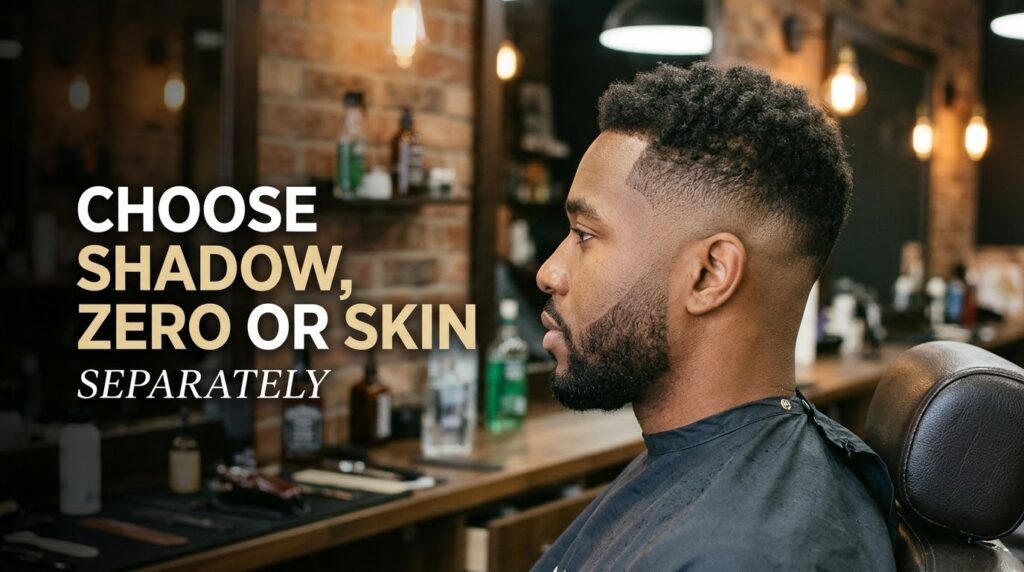
Many men mix up three terms: shadow fade, zero fade and skin fade. They sound alike, but they create different results. Knowing the difference will save you from surprises in the chair.
A shadow fade ends at a very short length, but not bare skin. The bottom looks like a soft shadow. It is gentle and blends well on any hair type.
A zero fade ends at zero guard, which means the clippers have no guard on the blade. The hair is cut very close but may still show a faint shadow of growth. It is clean but not shiny.
A skin fade or bald fade goes all the way to skin. Barbers often use a foil shaver at the end to make the skin smooth and bright. This gives the sharpest contrast.
| Type | Bottom finish | Look | Upkeep |
| Shadow fade | Very short hair | Soft and subtle | Low |
| Zero fade | Close clipper cut | Clean and tight | Medium |
| Skin fade | Bare skin | Sharp and bold | High |
If you are not sure which to pick, ask your barber to start with a shadow fade. You can always go tighter next time. It is much harder to grow hair back than to cut it shorter.
Also think about your skin. If you get razor bumps, a skin fade may irritate your skin. A shadow or zero fade leaves a thin layer of hair that protects the skin. That can reduce bumps and redness.
Natural Hairline Guidance for Fade Haircuts for Black Men
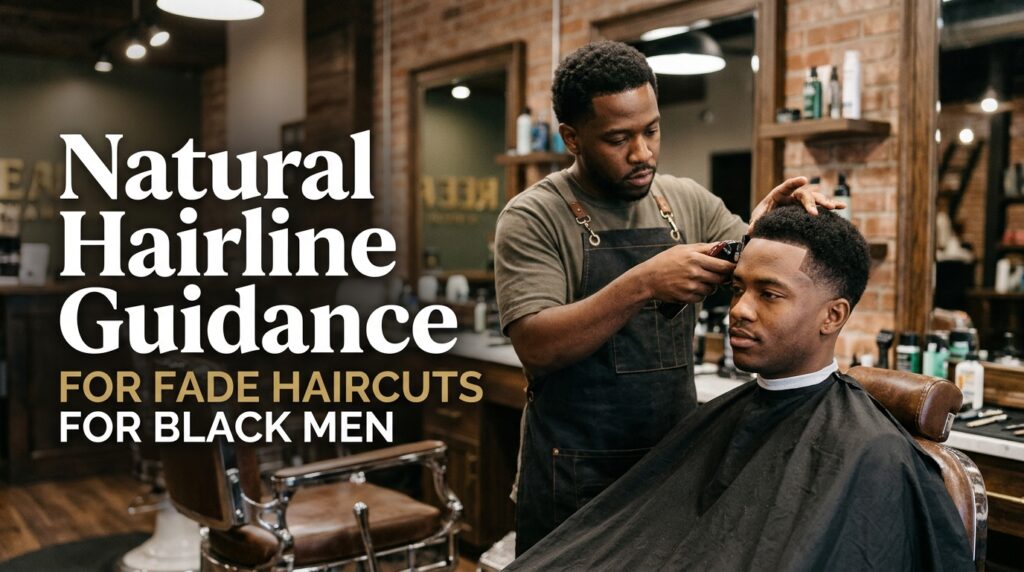
Your hairline is the frame of your face. A good fade respects it. A bad one fights it. Many Black men have hairlines that curve, dip or sit in a slightly uneven way. That is normal.
Do not ask your barber to force a perfectly straight line if your hairline does not support it. A line-up that is too sharp or too far forward can look fake. It can also cause scalp damage and lead to thinning at the edges.
Here are some rules to keep your hairline healthy and natural.
- Keep the line-up light. Ask for a soft edge, not a deep cut.
- Respect your natural shape. Follow the curve of your hairline.
- Avoid pushing the line forward. This can make the forehead look uneven.
- Watch for thinning. If the edges are weak, go for a softer line.
- Skip tight hair styles at the edges. Pulling can cause traction alopecia.
Traction alopecia is hair loss caused by constant pulling or tension. It is common around the temples and front hairline. Tight braids, tight twists and harsh razor use can all add to it. If you see small bumps or hair thinning in those areas, talk to a doctor or a dermatologist.
If your hairline is receding, a fade can actually help. A well-planned low or mid fade can blend the edges and make the top look fuller. Ask your barber to keep the front slightly longer to soften the look.
You can also use a hairline shadow trick. Ask for a slightly fuller edge, then lightly blend it into the forehead. This creates a natural look and hides small gaps.
Match the Top to Your Real Texture

The fade is only half the haircut. The top makes up the other half. A great fade with the wrong top will look off. The key is to match the top to your real hair texture, not the texture you wish you had.
Black hair has a wide range of patterns. Some men have tight coils. Others have loose curls or soft waves. Each one needs a different approach.
| Hair texture | Best top styles | Tips |
| Tight coils (4C) | Short afro, twists, high-top | Moisturize often and keep it shaped |
| Coily (4B) | Sponge twists, coils, faux hawk | Use curl cream and a small brush |
| Curly (3C to 4A) | Curls, twist-out, textured crop | Use light gel for definition |
| Wavy | Waves, low taper, Caesar | Brush daily and wear a durag |
Start by studying your hair when it is damp. Notice how it curls, where it lifts and where it lies flat. This tells you what kind of top will work. If your hair shrinks a lot when dry, keep that in mind. A top that looks long when wet may look half the size when dry.
Here are a few more tips to match the top well.
- Choose a top that fits your growth pattern. Do not fight cowlicks.
- Match the length to your routine. Longer tops need more time.
- Use the right products. Heavy gel on fine hair will weigh it down.
- Keep the scalp healthy. Healthy hair holds shape better.
If you are not sure, take a photo of your hair as it is right now. Show it to your barber and ask for an honest opinion. Good barbers know which tops will work and which will not.
Exact Barber Request
Many bad haircuts come from unclear requests. The barber does not read minds. If you say “give me a fade,” you might leave with a high skin fade when you wanted a low shadow fade.
The best method is to be specific. Use simple words, show a photo and name the guard sizes. Here is a script you can use.
“I want a low shadow fade with a number 1 at the bottom, blending into a number 3 at the top of the sides. Leave about two inches on top. Keep the line-up natural and do not push the hairline forward.”
Not every barber uses the same terms, so photos help a lot. Show pictures from the front, side and back. If possible, choose a photo of someone with hair like yours.
Here is a checklist to bring to your appointment.
- Fade height: Low, mid or high.
- Fade finish: Shadow, zero or skin.
- Top length: In inches or by finger width.
- Top style: Waves, curls, twists, afro or crop.
- Line-up: Soft, natural or sharp.
- Beard: Blend into the fade or leave it separate.
- Neckline: Rounded, squared or tapered.
Speak up during the cut, too. If the fade looks too high, say so before the barber goes further. Most barbers appreciate quick feedback. It helps them get the cut right.
Finally, find a barber you trust. A good barber who knows Black hair will understand your texture, your hairline and your growth patterns. Once you find one, stick with them. It saves time and gets better results over the long run.
Maintenance Without a Universal Schedule

There is no single schedule that works for every man. Hair grows at different speeds. Fade types need different levels of care. Your job and lifestyle matter, too.
That said, there are some general guidelines. Use them as a starting point, then adjust based on how your cut looks and feels.
| Style | Suggested barber visit | Home care |
| Skin fade | Every 2 to 3 weeks | Moisturize and protect the skin |
| Shadow or zero fade | Every 3 weeks | Light moisturizing |
| Taper | Every 3 to 4 weeks | Brush and condition |
| Fade with waves | Every 2 to 3 weeks | Brush daily, wear a durag |
| Fade with twists | Retwist every 1 to 2 weeks | Oil the scalp lightly |
Between visits, a few simple habits will keep your cut looking fresh.
- Moisturize daily. Dry hair breaks and looks dull.
- Use a soft brush. It trains waves and smooths the top.
- Wear a durag or satin bonnet at night. This protects your style and reduces frizz.
- Wash gently. Use a sulfate-free shampoo once or twice a week.
- Protect your skin. Use sunscreen on exposed scalp areas.
Razor bumps are common after a tight fade. They happen when curly hair grows back into the skin. To lower the risk, avoid shaving against the grain. Use a warm towel before the cut. After the cut, apply a soothing aftershave or a gentle lotion. If bumps keep coming back, speak to a dermatologist.
Watch for signs that you are overdue for a trim. The fade line may look fuzzy. The sides may feel thick. The top may lose its shape. When you see these signs, book your next visit.
Lastly, think about the budget. Visits every two weeks add up fast. If cost matters, choose a taper or a shadow fade. These cuts grow out more gracefully and need fewer touch-ups.
Sources and Further Reading
These trusted sources can help you learn more about hair care, scalp health and grooming for textured hair.
- American Academy of Dermatology Association (aad.org): Guides on razor bumps, scalp care and hair loss, including traction alopecia.
- Mayo Clinic (mayoclinic.org): Clear information on hair loss, scalp conditions and skin irritation.
- Cleveland Clinic (my.clevelandclinic.org): Articles on caring for curly and coily hair and keeping the scalp healthy.
- Your local licensed barber or dermatologist: Personal advice based on your hair, skin and hairline.
Always check with a medical professional if you notice ongoing hair loss, painful bumps or scalp problems.
Frequently Asked Questions
What is the best fade haircut for Black men in 2026?
The mid fade with a short coily top is the most popular and easiest to wear. It suits most face shapes and hair textures.
How often should I get a fade haircut?
Most men visit the barber every two to three weeks. Skin fades need more frequent visits than tapers or shadow fades.
What is the difference between a fade and a taper?
A fade drops very short, often to skin. A taper trims gradually and leaves more length at the edges.
Which fade is best for razor bumps?
A shadow or zero fade is usually gentler than a skin fade. It leaves a thin layer of hair that protects the skin.
What should I say to my barber to get a good fade?
Name the fade height, the finish and the top length. Bring photos from the front, side and back to avoid mistakes.
Final Thoughts
A great fade starts with a clear plan. Choose your placement first, then pick the finish and the top that suits your texture. Respect your natural hairline, and do not chase a line that does not fit your head. These small choices make a big difference.
The seven styles in this guide give you plenty of room to explore. Bring photos, use clear words and talk to your barber about upkeep. Take care of your scalp between visits, and your cut will look sharp from the first day to the last.

Adam Collins is a fashion writer and content researcher at Faxhion Serp. He focuses on fashion trends, clothing, styling ideas, accessories, and practical wardrobe guidance. Adam creates clear, well researched articles designed to help readers understand fashion topics, discover fresh ideas, and make informed style choices.